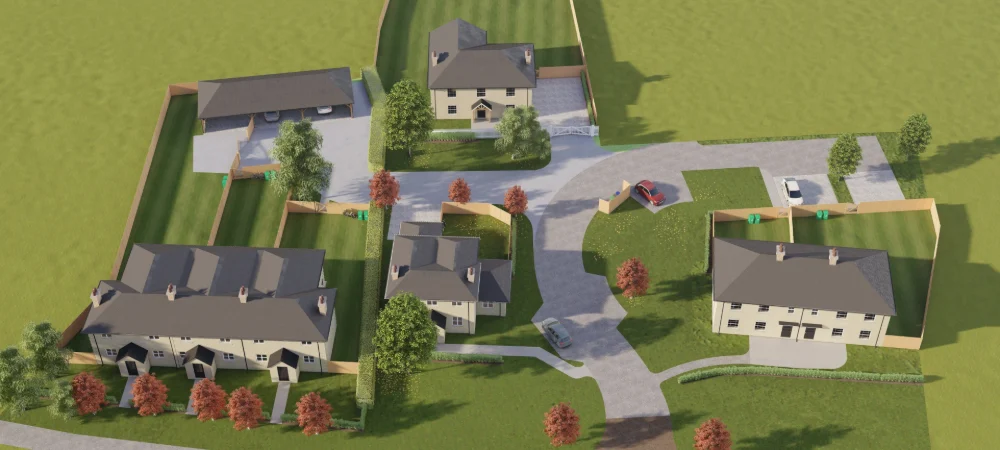
Autodesk has highlighted the need for a more connected, digital approach to planning, as new analysis suggests the UK could significantly improve the delivery of new towns and major housing developments. The findings come as the government confirms plans for seven new towns across England which form part of its largest housebuilding programme in more than 50 years.
Each development is expected to deliver thousands of homes alongside infrastructure and services, forming a central pillar of the government’s ambition to build 1.5 million homes by 2029.
Published alongside this milestone, Autodesk’s report Planning for Delivery sets out how a more connected, digital planning system could help ensure these large-scale developments are delivered with greater certainty, coordination and public trust.
The report, submitted to the UK government’s New Towns Taskforce, argues that the current planning system remains fragmented and largely analogue, with data spread across organisations and key issues often identified too late in the process. This lack of coordination can introduce risk, delay decision-making and increase costs across major developments.
With planning delays, supply chain issues and increasing project complexity threatening delivery, Autodesk is urging policymakers to embrace connected digital planning systems to unlock faster, more transparent and more coordinated deployment at scale.
Digitising the planning process could support delivery of the newly confirmed towns by:
• Improving certainty in planning outcomes, by identifying risks and constraints earlier
• Strengthening coordination across stakeholders, reducing rework and late-stage changes
• Enhancing transparency for communities, supporting more meaningful engagement and trust
• Enabling more consistent delivery, as multiple large-scale developments are progressed in parallel
Autodesk’s key recommendations from the report include:
Establishing a national baseline for a shared digital planning system: Rather than mandating specific vendors, the consultation should focus on defining common requirements across the board
Embedding collaborative digital workflows in enw town delivery: Instilling this requirement at programme level would accelerate validation, strengthen transparency and materially improve delivery confidence
Collaborating with private industry to support planners: Equipping experienced planners with the tools, training and support needed to adopt digital tools will accelerate delivery
Economist projections within the report highlight the scale of the opportunity. The analysis shows that applying modern digital planning tools to a new town development could reduce the design phase alone from nearly a year to a matter of weeks. Correspondingly, the cost of design iteration could fall by approximately 60–70%, reflecting the reduced need for repeated modelling and redesign cycles.
Mike Reader, MP, Chair of the Infrastructure APPG, said: “New towns offer us a once-in-a-generation opportunity to do things differently. We can take a joined-up approach from day one, aligning housing with energy, water, transport and digital infrastructure, whilst making full use of modern methods of construction. That’s how we build at scale, at pace and with place in mind. I welcome this report’s focus on how government can support that mission.”
Chris Curtis MP, MCHLG Select Committee Member, said: “The New Towns programme is a bold, forward-looking project that captures the post-war spirit of ambition we urgently need today. It gives the government the ability to plan strategically, unlock regional growth and deliver at pace. Milton Keynes stands as proof of what can be achieved when determination meets delivery and that same mindset must shape this new generation of New Towns. The report highlights that a clear advantage we have over Wilson’s government is technology. We must harness it to ensure our planning system is capable of delivering each New Town quickly and efficiently.”